
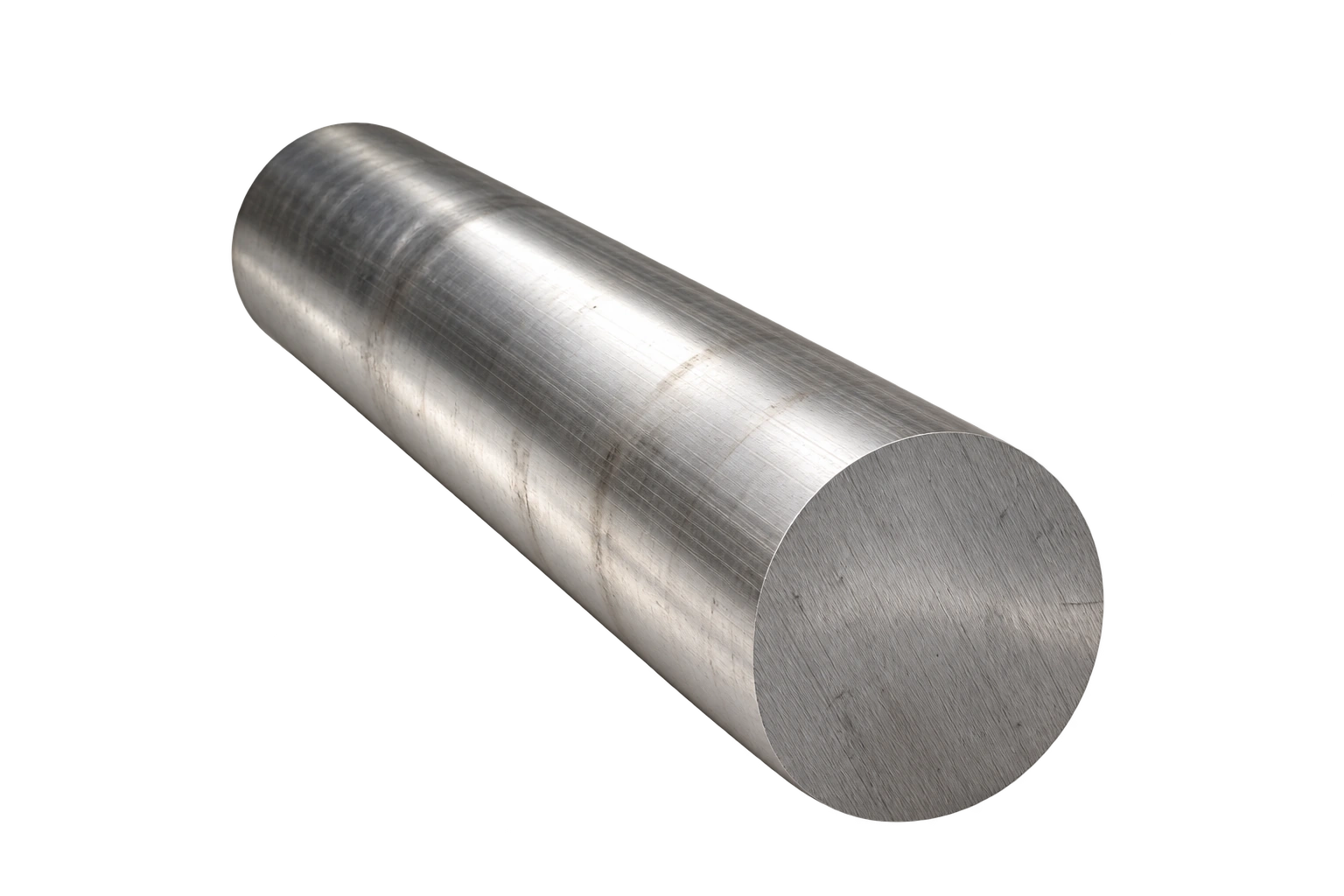
17-4 PH Stainless Steel Round Bar
17-4 PH stainless round bar, Condition A (age to H900–H1150), for high-strength parts machined soft, then aged. Nox stocks it in the diameters in the table below and cuts it to the length you need, −0/+1/8 in, with mill certs and heat/lot traceability. $180 order minimum, no minimum quantity. DFARS melt is available; choose it when you quote.
Enter your size
Decimals or fractions, like 12.5 or 12 1/2. Cut to order up to 144.5 in long.
Mill certifications included with every option. Certification requirements
Factos prices your cut instantly in the cart.
Sizes
Specifications
| Grade | 17-4 PH |
|---|---|
| Condition | Condition A (age to H900–H1150) |
Cutting and lengths
We cut stainless round bar to any length, −0/+1/8 in; tighter tolerances are available on request. Bar is cut oversize (+1/8 in) so you can machine to finished size.
Mill certs and DFARS
Full mill certs with heat/lot traceability ship with every order and are saved in your portal. Nox is certified to ISO 9001:2015. DFARS melt is available for 17-4 PH; choose it when you quote.
17-4 PH Condition A Stainless Round Bar properties
17-4 PH Condition A round bar is UNS S17400 stainless in the solution-treated condition supplied before final precipitation aging. Shops often machine it in Condition A, then apply an approved H900-through-H1150 aging cycle to reach the strength, hardness, toughness, and corrosion balance required by the drawing.
Values labeled typical are orientation- and section-dependent references, not design allowables. Use the current governing specification and the mill certificate for acceptance.
| Property | Reference value | How to use it |
|---|---|---|
| Density | 0.282 lb/in³ (7.80 g/cm³) | Nominal value used by the NOX weight calculator |
| Supply condition | Condition A, solution treated | Verify the actual condition on the cert and drawing |
| Strength mechanism | Copper precipitation during aging | H condition controls the final property balance |
| Structure | Martensitic precipitation-hardening stainless | Generally magnetic |
| Final heat treatment | H900 through H1150 families | Use the exact approved cycle and specification revision |
Condition A is a starting point, not a universal final state
Condition A means solution treated. It is convenient for stock and machining, but many designs require a final precipitation-aging condition such as H900, H1025, H1075, or H1150. Each aging temperature changes strength, hardness, ductility, toughness, dimensional response, and stress-corrosion behavior.
Never treat the H conditions as a simple strength ladder. H900 offers very high strength and hardness; higher-temperature conditions generally sacrifice some strength for more ductility, toughness, and stress-corrosion resistance. The drawing and heat-treatment specification must identify the required final condition.
Machine and heat treat as one process plan
Condition A is commonly chosen for machining before aging. The material is still stronger and less forgiving than annealed 300-series stainless, so use a rigid setup, sharp carbide tooling, and controlled heat. Leave finish stock where the aging cycle or straightening plan can move dimensions.
Maintain heat identity through outside heat treatment and request furnace records and hardness or mechanical verification required by the purchase order. Mixing an H900 part with an H1150 part is a material-control failure even though both began as the same Condition A bar.
Write both the supply and final conditions
For raw bar, state 17-4 PH or UNS S17400, Condition A, ASTM A564 or AMS 5643, diameter, cut length, finish, and traceability requirements. For the finished part, separately define the final H condition and applicable heat-treatment procedure. Do not expect the raw-stock order to communicate the finished-part requirement.
Review the cert for UNS, chemistry, solution-treatment condition, specification and revision, heat number, and tests. If the supplier offers material already aged, confirm that its condition matches both machining strategy and the exact drawing callout before accepting it.
Specifications and purchase callouts
The controlling drawing decides which specification applies. A similar alloy name or typical-property table does not demonstrate compliance.
- ASTM A564
- SAE AMS 5643
- ASME SA-564 where applicable
History of 17-4 PH (UNS S17400)
Precipitation-hardening stainless steels were commercialized in the mid-20th century to combine stainless corrosion behavior with strength levels beyond conventional austenitic grades. The 17-4 name describes its nominal chromium and nickel content. Copper precipitation provides the primary age-hardening response, while niobium (historically called columbium) helps stabilize carbon and control the microstructure.
That heat-treatment flexibility changed how high-strength stainless parts could be manufactured. Complex pieces could be machined in the relatively workable Condition A and then aged to a selected H condition. 17-4 PH became established in aerospace, energy, industrial, medical, and defense applications, with ASTM A564 and AMS 5643 providing widely recognized bar requirements.
- Mid-20th century PH stainless is commercialized. Copper-strengthened martensitic stainless offers a practical combination of corrosion resistance and age-hardened strength.
- Industrial adoption Single-step aging simplifies production. Parts can be machined in Condition A and aged later to a drawing-selected H condition.
- Today 17-4 spans many high-load markets. The alloy is common in aerospace, valves, pumps, energy hardware, medical tools, and industrial components.
Primary references
What customers say
“I bought a little over a ton of metal from Nox and, even with the cost of freight, it was cheaper than our usual supplier. I can't get over that. Nobody's ever beaten them on price before.”
Patrick McGowan
One Off Parts







Frequently asked questions
What is 17-4 PH stainless round bar used for?
Precipitation hardening; DFARS melt available.
What condition is 17-4 PH round bar supplied in?
Condition A (age to H900–H1150).
What diameters of 17-4 PH round bar do you stock?
The diameters in the table above, each cut to the length you need.
Is 17-4 PH available with DFARS melt?
Yes. DFARS melt is available for 17-4 PH; choose it when you quote.
Can you cut stainless round bar to length?
Yes. We cut it to the length you enter, −0/+1/8 in; tighter tolerances are available on request.
Is there a minimum order?
$180 order minimum. No minimum quantity, so a single piece is fine.
Do you include mill certs?
Yes. Full mill certs with heat/lot traceability ship with every order and are saved in your portal.
When will it ship?
Your ship date is calculated in under 60 seconds with your instant quote, before you order.
What does Condition A mean for 17-4 PH?
Condition A is the solution-treated condition before final precipitation aging. It is a common supply state and machining starting point. Many finished parts must subsequently be aged to an H condition specified by the engineering drawing.
What is the difference between H900 and H1150?
They name aging treatments at different temperatures. H900 generally targets higher strength and hardness, while H1150 generally offers lower strength with improved ductility, toughness, and stress-corrosion behavior. Use the exact drawing requirement.
Can I use Condition A as the final condition?
Only when the design and governing specification explicitly permit it. Condition A is often an intermediate manufacturing state rather than the intended service condition, and its property balance differs substantially from aged material.
What specifications cover 17-4 PH round bar?
ASTM A564 and AMS 5643 are common bar specifications, with ASME SA-564 used in applicable code work. The order should identify the precise specification, revision, supply condition, and any final heat-treatment requirements.
 Reviewed by Danny Goldberg · Last updated